 Prospective students often ask whether Spanish is an easy language to learn. The good news is that it is one of the easiest major European languages for an English speaker to pick up. As both of our languages derive many words from Latin, a lot of them will be recognisable to you almost immediately.
Spanish is said to be the most phonetic of the main European languages and spelling in Spanish is actually more regular than English. This is due in part to the fact that the Royal Spanish Academy, whose role we looked at in a previous blog, has simplified and standardised it over time. Spanish is much more predictable as a result, so once you’ve grasped the basics it is relatively easy to apply those rules to new vocabulary when you come across it. Plurals in Spanish are formed in the same way as English by adding –s, which makes it very natural for English speakers. It’s true that you will need to get accustomed to genders and noun-adjective agreement, but this is true of most European languages and you will soon find it second nature.
Of course, though it is considered easy, learning Spanish still takes some effort, just as learning any language – even your own – does. This is where a native Spanish tutor is immensely beneficial, helping you to perfect your pronunciation as well as covering all the grammar you will need. Group lessons can be a really fun way to learn with friends or colleagues, or see just how much you can pick up in a short time with our intensive courses.
 This year’s GCSE results showed a marked and very welcome increase in the take-up of modern foreign languages amongst school pupils. It’s the first time in over a decade that the number of students studying a language to this level has risen. Though French and German both registered an increase, at 15.5 per cent and 9.4 per cent respectively, and some other minority languages enjoyed something of a surge, Spanish outstripped all other languages with a huge rise of 25.8 per cent. It remains to be seen whether these same students will go on to complete A-levels in their chosen languages. For the moment though, the downward trend at that level continues with numbers of French and German students still in decline. Only Spanish is on the rise with an increase of 4.1 per cent at A-level this year.
 In a previous blog we looked at the indisputable importance of Spanish in the world. It’s relevance as a language becomes even greater, however, when we consider how many of the emerging economies are Spanish-speaking countries.
 The Royal Spanish Academy is the official royal body responsible for regulating the Spanish language. It is usually abbreviated to RAE, an acronym for its Spanish title, Real Academia Española. The academy was founded in 1713 and is based in Madrid, but it also plays a role in governing the language spoken in twenty-one other countries through its affiliation with the Association of Spanish Language Academies (Asociación de Academias de la Lengua Española), set up in Mexico in 1951 which is a union of all the separate language academies in the Spanish-speaking world.
 Studies of languages used on the internet* show, unsurprisingly, that English is the most-used language online, with around 55% of websites using English as their content language. Spanish is among the group of next most highly-used languages along with German and Russian. What is significant though is that use of the Spanish language online increased dramatically in the ten years between 2001 and 2011, expanding at a rate of 743%, compared to 281% for English. This can perhaps be seen as confirmation of the growing importance of Spanish as a world language and the rapid expansion in the numbers of Spanish speakers in recent years, particularly in the US.
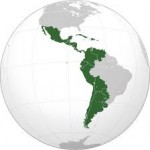 The presence of Spanish influence and the Spanish language in the Americas goes all the way back to Christopher Columbus’ arrival there in 1492. Over the next four centuries the Spanish Empire expanded across Mexico, most of Central America, the western half of South America and the Caribbean. Its reach even extended to the northern states of Washington and Oregon. Spanish rule in many areas of the Americas endured right up until the revolutionary movements of the nineteenth century, at which point the colonies were lost, but the language remained.
 According to the US Census Bureau, the number of Spanish speakers in the US has more than doubled since 1990 and the number of people aged five and older who now speak Spanish at home as their first language now totals almost 37 million. When we take into account the number of people who speak Spanish as a second language, the total rises to 45 million, and a further 6 million are said to be learning Spanish in the US today. Given this staggering rate of growth, it’s thought that by the year 2050 the number of Spanish speakers in the US could rise to as many as 100 million.
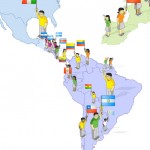 I’m often asked about the benefits of learning Spanish, and I frequently tell my students that one of the greatest benefits is being able to communicate when you visit a Spanish-speaking country.
 Spanish is undeniably one of the world’s most important languages. The sheer number of Spanish speakers is testament to that fact, totalling more than 400 million worldwide. In fact, it is the third most widely-spoken language in the world after English and Mandarin.