There can be few people with knowledge of contemporary music who are unfamiliar with the name Gloria Estefan. She’s  the most successful crossover Latin musician ever, with seven Grammy awards and 100 million record sales to her name. Gloria María Milagrosa Fajardo García de Estefan was born in September 1957 in Havana, Cuba. Have you ever wondered at the lengthy names quoted in our biographical blogs? These follow Spanish naming customs where the paternal name (Fajardo) is given first and the maternal family name (Garcia) second. ‘de Estefan’ was added after her marriage in 1978 to Emilio Estefan.
Aside from a musical career spanning over four decades, Estefan is perhaps best known for her courage and determination in recovering from a fractured spine after her tour bus was involved in a crash in March 1990. There was speculation that she may never walk again and she endured a great deal of pain, once saying, “There were times when the pain was so bad I prayed I’d pass out”, yet she committed herself fully to intensive rehabilitation therapy and resumed touring and singing after just 10 months.
More recently, Estefan has diversified into children’s literature, writing two successful books, The Magically Mysterious Adventures of Noelle the Bulldog and its follow-up, Noelle’s Treasure Tale. Both are available in Spanish language versions entitled Las Magicas y Misteriosas Aventuras de una Bulldog Llamada Noelle and El Tesoro do Noelle: Una Nueva Magica y Misteriosa Aventura respectively. Reading children’s books is a great way to complement your Private Spanish Lessons and expand your knowledge of the language. The simpler language of children’s literature is more manageable for learners and you can gradually increase the difficulty of your reading as your skills improve – just as we do when learning our native languages.
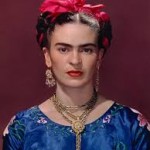 lifelong health problems, and these contributed to the “pain and passion” she displayed in her works. She is probably best known for her self-portraits, a result of the isolation enforced on her by her poor health. As she herself said, “I paint myself because I am so often alone and because I am the subject I know best”. Though she is sometimes referred to as a surrealist painter, Kahlo refuted this, saying, “They thought I was a surrealist, but I wasn’t. I never painted dreams. I painted my own reality”.
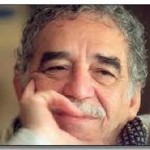 in Aracataca, Colombia in March 1927, his full name is Gabriel José de la Concordia García Márquez, though he is known throughout the Latin American world simply as ‘Gabo’, a mark of the great affection in which he is held.
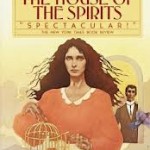 commercial success with novels such as La Casa de los Espiritus (The House of the Spirits) and La Ciudad de las Bestias (City of the Beasts) among her many published works.
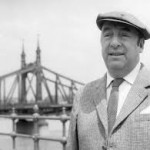 Pablo Neruda who is hailed as one of the most important poets of the 20th century. Born Neftali Ricardo Reyes Basoalto in 1904, Neruda was something of a prodigy, having composed his first poems at the age of ten and been published by the time he reached his early teens.
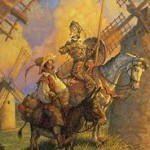 greatest works of literature ever written in any language. Its full title in Spanish is El ingenioso hidalgo don Quijote de la Mancha, or The Ingenious Gentleman Don Quixote de la Mancha. The novel by Cervantes follows the adventures of Alonso Quijano, who reinvents himself as Don Quixote and embarks on a quest to revive chivalry, accompanied by his squire, Sancho Panza.
 week we turn our attention to a medium whose claim to being cultural is somewhat dubious, but nevertheless it is a fixture on television screens across the Spanish-speaking world and beyond, and it could help you to engage with the language in new ways: the Latin American soap opera.
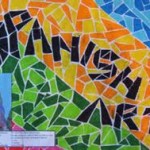 learning; they’re more likely to persevere with their studies and they enjoy better results. To that end, we’re going to take a look at one of the great pillars of Spanish culture, art.