Lingua Clinic | Private Spanish Tutor | London

Spanish lessons and courses

  • Home
  • About Us
  • Services
    • Private Spanish Lessons
    • Group training Spanish
    • Intensive Spanish courses
    • Online Spanish Lessons
  • Test your Spanish
  • FAQ
  • Testimonials
  • Blog
  • Contact

Isabel Allende

18 February 2014 by Antonio

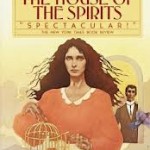
Chilean author Isabel Allende, sometimes called “the world’s most widely read Spanish-language author”, has achieved great Spanish tutor Londoncommercial success with novels such as La Casa de los Espiritus (The House of the Spirits) and La Ciudad de las Bestias (City of the Beasts) among her many published works.

Perhaps the key to Allende’s great success is her flowing style of prose which is often likened to a skilled storyteller telling a tale orally. Allende often uses complex and very long sentences; she frequently digresses and repeats herself, just as a person telling a story tends to do, all of which adds to the appeal of her writing. At other times she creates impact by doing just the opposite and writing in the economical language of her journalistic past when she wants the action speaks for itself, a style she employs in some of her more brutal scenes to, in her own words, “grab the reader by the neck”.

Allende describes her writing as an organic process, one which she says she would be unable to do in any language other than her native Spanish, although she also speaks English well, having lived for many years in California. For such an acclaimed author, Allende remains very modest, and admits that her years in America have had a detrimental effect on her Spanish, to the point that she now needs a Spanish editor to correct mistakes and remove the American influences from her manuscripts.

Allende is a formidable writer who produces novels rich in emotion, vivid characters and strong plots. Her works are widely translated so if you need a few more Spanish lessons before you’re ready to tackle them in their original language, do make a point of discovering her in English.

Filed Under: Blog

Pablo Neruda

10 February 2014 by Antonio

Continuing our series on some of the most influential Spanish speakers, this week we take a look at the Chilean diplomat and politicianPrivate Spanish Lessons Pablo Neruda who is hailed as one of the most important poets of the 20th century. Born Neftali Ricardo Reyes Basoalto in 1904, Neruda was something of a prodigy, having composed his first poems at the age of ten and been published by the time he reached his early teens.

By 1920 he had adopted the pen name Pablo Neruda, in honour of the Czech poet Jan Neruda. Neruda is celebrated for the wide variety of styles in which he wrote. He is renowned for his use of metaphor and imagery, and first came to critical acclaim at the age of just 19 with his second major published work, a series of erotic poems entitled Veinte poemas de amor y una canción desesperada or, as it was translated in English, Twenty Love Poems and a Song of Despair. His other works include styles as diverse as historical epics, political manifestos and surrealist poetry. He also penned his Memoirs detailing his early life in rural Chile, his student years in Santiago, his political career and his exile from and later return to Chile after the banning of communism, of which he was a fervent supporter.

Neruda’s poetry ultimately won him the Nobel Prize for Literature in 1971, just two years before his death. His works have been widely translated and you can enjoy many of them in English, though others have been deemed too difficult to translate and are best experienced in their original Spanish. Need some help to attain the required language skills? Try our Private Spanish Lessons.


Filed Under: Blog

Don Quixote de la Mancha

3 February 2014 by Antonio

In 1605, the first volume of the most influential piece of Spanish literature was published. Indeed, it is today considered one of the Spanish Lessons Londongreatest works of literature ever written in any language. Its full title in Spanish is El ingenioso hidalgo don Quijote de la Mancha, or The Ingenious Gentleman Don Quixote de la Mancha. The novel by Cervantes follows the adventures of Alonso Quijano, who reinvents himself as Don Quixote and embarks on a quest to revive chivalry, accompanied by his squire, Sancho Panza.

Cervantes was undoubtedly a master storyteller, but we want to focus on the language of Don Quixote, which helped to make it the masterpiece it is, and was also instrumental in cementing the position that Spanish enjoys today. The name of the main character is a play on words in several different ways, not least because of its hint at a combination of the name Quijano with the Spanish augmentative suffix -ote, suggesting ‘The Great Quijano’, which is particularly apt given the character’s delusions of grandeur. The central character speaks in Old Castilian, a medieval form of Spanish he copies from his chivalric books, though the people he meets struggle to understand him as a result – the humorous effect being much admired at the time of publication.

The novel gave rise to many well-known Spanish phrases and is even thought to be the origin of the English saying ‘The proof of the pudding is in the eating’, derived from a not entirely accurate 1700 translation of the book when in fact the original text actually read ‘You will see when the eggs are fried’. If you haven’t discover this classic yet, you really should put it on your must-read list, in English at first perhaps, then later with the help of Spanish Lessons you can enjoy the novel as it was originally written.

Filed Under: Blog

The use of Vos in Argentina

29 January 2014 by Antonio

If you’ve already started Spanish language lessons with us then you have probably learned the 2nd person singular personal pronoun tú which is used in informal situations such as when speaking to friends, relatives and people you know well. Spanish tutor london

However, if you should travel to Latin America, you are likely to encounter a different form altogether. In Argentina, you will notice that the word used for the informal ‘you’ is ‘vos’. Though you will be understood if you use tú, it is highly unlikely that you will hear anyone use it, unless of course they happen to be visiting from Spain! Vos is used in other parts of Latin America too, for example in parts of Colombia, and to a lesser extent in Venezuela, Ecuador, Chile and southern Mexico, though it is only in Argentina that it is used to the exclusion of tú.

Vos is conjugated rather differently to tú, typically taking a form where the accent is on the finally syllable with endings of -ás to the stem of ar verbs, -és for er verbs, and -í for ir verbs, dropping the stem change that comes with tú in standard Spanish. There are some irregular forms too, notably the second person of the verb ser (to be) is sos, meaning the equivalent of tú eres is vos sos.

If you are planning a trip to South America, don’t panic thinking that you need to learn all of the new forms, you will quickly pick up the way it’s used by listening to others. And if you have any questions, our native tutors will be happy to help you out.

Filed Under: Blog

Latin American Soaps

20 January 2014 by Antonio

Last week we were extolling the virtues of taking an interest in culture as way to boost your motivation when learning a language. This Spanish Tutor Londonweek we turn our attention to a medium whose claim to being cultural is somewhat dubious, but nevertheless it is a fixture on television screens across the Spanish-speaking world and beyond, and it could help you to engage with the language in new ways: the Latin American soap opera.

You might wonder what value there is in watching what is often thought of as low-budget, low-brow entertainment such as this, but any and every means of practising a language can be helpful in order to supplement your conventional studies. Latin American soaps also give you some exposure to modern slang and expressions which you may not necessarily pick up in the classroom, but which will certainly help you to grasp everyday conversation when you visit any Spanish-speaking country.

Soap operas are hugely popular across Spain and Latin America and you can find them quite readily to stream online or download. You may find it helpful to seek out those that have English subtitles initially, but as you get more accustomed to the dialogue, you will hopefully find yourself needing to read them less and less often, and eventually do without them altogether. But be warned, though it may start out as an academic exercise, those plotlines can be seriously addictive!

If you live in London, don’t forget that we can help you with private or group Spanish lessons with native tutors, whether you’re a beginner, intermediate or more advanced student.

Filed Under: Blog

Spanish Art

13 January 2014 by Antonio

Research suggests that language learners do better if they take an active interest in the culture of the country whose language they are Spanish Tutor London Lingua Cliniclearning; they’re more likely to persevere with their studies and they enjoy better results. To that end, we’re going to take a look at one of the great pillars of Spanish culture, art.

Spain has a rich history of art dating back thousands of years. The oldest surviving examples of Spain’s early art are probably that of the ancient Iberians, whose cave paintings and sculptures are some of the finest of their kind. However, it’s for later artists that Spain is particularly famous – those of the Spanish Golden Age of the 15th to 17th centuries, when Spanish influence in the art world was at its height.

It’s during this period that Spain produced important artists such as Diego Velázquez, court painter to King Philip IV, and leading exponent of artistic realism. His portraits and landscapes were lauded throughout Europe and his most famous work, Las Meninas, is acknowledged to be one of the most significant paintings in the history of Western art. Also associated with this period are the great masters Francisco de Zurbarán, Bartolomé Esteban Murillo and, though not Spanish by birth, El Greco.

Later Spain produced noted artists like Goya, a romantic painter active during the Peninsular War, who is heralded as the last of the old masters and first of the modern. Spanish artists were also at the cutting edge of 20th-century art movements too, with Picasso and Gris being leading figures in cubism, Dali in surrealism and Miró in abstract art.

If this small taste of Spanish art has whetted your appetite for the language, we can help you with private Spanish lessons.


Filed Under: Blog

Is improving your Spanish one of your New Year’s Resolutions?

6 January 2014 by Antonio

¡Feliz año nuevo! This is traditionally a time for making resolutions and many people resolve to learn another language. Spanish is an Spanish Tutor Londonexcellent choice as it is one of the most widely-spoken languages in the world and the number of speakers is growing all the time, so it’s one of the most useful languages you could acquire. As we’ve mentioned previously, Spanish is a very phonetic language, and its Latin roots make it one of the easiest languages for English speakers to learn. This means that there’s absolutely no reason to feel daunted as you embark on your Spanish course because you’ll come across a lot of words whose meaning you can easily understand.

One of the things that learners, and particularly adult learners, often struggle with is gaining the confidence to attempt to converse with native speakers of their new language. They fear making mistakes and appearing silly, but these self-imposed barriers to communication are really not necessary with Spanish. Whilst some languages like English and the German language typically demand that people speak to a high standard, especially if they are using the language for business purposes, the Spanish-speaking world is much more relaxed and nobody will think the worse of you if your first attempts at conversation are a little hesitant or not entirely correct grammatically. In fact, most people will applaud your efforts and do their best to help you, so there’s no need to feel nervous about those first attempts at Spanish outside of the classroom.

Of course, good preparation will help both your language skills and your confidence, and the best preparation is to undertake a course with a patient and experienced native tutor, such as those at Lingua Clinic.

Filed Under: Blog

Christmas Customs in Spain

9 December 2013 by Antonio

Christmas in Spain is deeply religious. The country’s patron saint is the Virgin Mary and the Christmas season begins on 8 December,Private Spanish lessons the feast of the Immaculate Conception, with a special ritual known as los Seises (the dance of six) in front of Seville’s Gothic cathedral in which not six but ten elaborately-dressed boys perform a dance with intricate movements and gestures which is very moving to watch.

Most homes have a manger with carved nativity figures around which families gather to sing carols, dance and play tambourines.  The cow is honoured at this time as it’s believed that when Mary gave birth, the cow in the stable breathed on the Baby Jesus to keep him warm.

On Christmas Eve, or Nochebuena, families rejoice around their nativity scenes and eat the traditional Christmas treat of turron, a kind of almond candy. Tiny oil lamps are lit in homes, and after the traditional Midnight Mass and Christmas Dinner, streets fill with revellers dancing the special Christmas dance, the Jota, to the sound of guitars and castanets. The words and music to the Jota are said to be hundreds of years old.

Tradition has it that gifts are brought by the Three Wise Men on 6 January. It is believed that the Magi re-enact their journey to Bethlehem every year at this time and children leave out shoes filled with straw, carrots, and barley for their horses. Though all of the Magi are revered in Spain, the children’s favourite is Balthazar who rides a donkey and is the one believed to leave gifts.

If you want to get more closely acquainted with the language and customs of Spain, a good place to start is with our Private Spanish lessons, provided at your workplace or home throughout London.

Filed Under: Blog

What are the biggest influences on the Spanish language?

2 December 2013 by Antonio

Spanish, as we already know, evolved from the Latin which came into the region some 2,000 years ago. Latin is not, however, the only Private Spanish Lessonslanguage to have contributed to the development of modern-day Spanish. It’s also significantly influenced by Arabic, thanks to the long-term Muslim presence in the Iberian Peninsula between the years 711 and 1492 AD. Loan words from Arabic began to appear in Spanish in the 8th and 9th centuries as the number of speakers of the language increased, but the influence of Arabic peaked during the Reconquista, when large territories where large numbers of people spoke Arabic or Arabic-influenced local dialects were recaptured from their Moorish rulers. This was a period in which many Arabic words and their derivatives were absorbed into the Castilian language. One result of this is that Spanish often has both Arabic and Latin derived words with the same meaning, such as escorpión and alacrán, meaning scorpion. The Arabic versions are often favoured in areas which fell under Moorish rule for longer periods.

In more recent times, Spanish has borrowed words from various European languages, but the biggest influence is from English, with many words and expressions, particularly those relating to technology, coming into common usage in Spanish. In Latin America, thanks largely to US influences, there’s an even bigger trend for borrowing English words, often with the original spelling, other times using words of English derivation, such as la computadora (the computer) which is quite different from the Spanish el ordenador.

If you’d like to gain an insight into the wonderfully colourful and expressive Spanish language, our Private Spanish Lessons are the ideal place to begin.

Filed Under: Blog

Spanish Literature – es mágico!

25 November 2013 by Antonio

Spanish literature down the centuries has provided a wealth of classics that any book lover should have on their must-read list. From Spanish Tutor LondonCervantes’ immortal Don Quixote de la Mancha, published in 1605 and considered to be the world’s first modern novel; the poetry and prose of Federico García Lorca, who was catapulted to fame posthumously after his murder at the start of the Spanish Civil war; through to modern classics like Love in the Time of Cholera by Nobel Prize-winning Columbian author Gabriel García Márquez, and the highly popular works of Carlos Ruiz Zafón. Spanish literature is truly magical.

Reading in any language broadens both the mind and the vocabulary. Though widely translated, there’s nothing quite like the sense of achievement gained from being able to read these famous texts in their original language. If you’re a traditional book reader, keep a Spanish dictionary on hand to help you out with any unfamiliar words. If you’re a fan of the e-book, it’s even easier. Here’s a great tip: as many classics are free, you can download both the Spanish and English versions and refer to them side by side. As your Spanish improves you may even spot some errors and omissions in the translation. Install a Spanish dictionary too and you can check anything you’re unsure of instantly. You can note any queries or points of interest for discussion with your Spanish tutor. Happy reading!

Filed Under: Blog

  • « Previous Page
  • 1
  • …
  • 6
  • 7
  • 8
  • 9
  • 10
  • 11
  • Next Page »

Lingua Clinic

The perfect choice for learning Spanish.

We teach Spanish in person.

Please call us.

+44 (0) 20 7148 0320

Search

Share this page

Digg ThisSubmit to reddit
Share

About

Lingua Clinic, based in the heart of the City of London, is the perfect choice when learning Spanish. Our location enables us to provide on-site Spanish tuition anywhere in the Greater London Area.

We specialise in providing tutors for your private Spanish lessons.

All Spanish lessons and courses are tailored towards your level and progress.

(more…)

Recent Posts

  • Spanish expressions that don’t translate into English (and what they really mean)
  • False friends in Spanish: The words that trick English speakers
  • Por vs Para in Spanish: The Tiny Words That Cause Big Drama
  • Business Spanish Tutor in London for Corporate Professionals
  • Why Apps don’t make you fluent in Spanish

Contact

We teach Spanish in-person. Please call or email.

Lingua Clinic
35 New Broad Street
London
EC2M 1NH
+44 (0) 20 7148 0320

About Us

Lingua Clinic, based in the heart of the City of London, is the perfect choice when learning Spanish. Our location enables us to provide on-site Spanish tuition anywhere in the Greater London Area.

We specialise in providing tutors for your private Spanish lessons.

All Spanish lessons and courses are tailored towards your level and progress.

(more…)

© Copyright 2015 Lingua Clinic | Private Spanish Tutor | London · All Rights Reserved · Site by Peter Mahoney