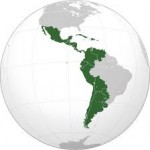
 The presence of Spanish influence and the Spanish language in the Americas goes all the way back to Christopher Columbus’ arrival there in 1492. Over the next four centuries the Spanish Empire expanded across Mexico, most of Central America, the western half of South America and the Caribbean. Its reach even extended to the northern states of Washington and Oregon. Spanish rule in many areas of the Americas endured right up until the revolutionary movements of the nineteenth century, at which point the colonies were lost, but the language remained.
Spanish continues to be spoken across those same areas of Central and South America, and though it now takes second place to English in North America, the number of Spanish speakers is increasing dramatically, more than doubling in the last two decades. Even though it doesn’t enjoy the status of an official language, it’s estimated that by the year 2050 there could be as many as 100 million Spanish speakers in the United States.
With Spanish being so widely spoken in one of the world’s leading economies, and given that several of the emerging economies are to be found in Spanish-speaking parts of South America, it seems certain that Spanish can only increase in importance in the world.
If you’d like to be part of the rapid growth of the Spanish language, you could try one of our intensive Spanish courses, delivered in your home or office at a time to suit your busy schedule.
 According to the US Census Bureau, the number of Spanish speakers in the US has more than doubled since 1990 and the number of people aged five and older who now speak Spanish at home as their first language now totals almost 37 million. When we take into account the number of people who speak Spanish as a second language, the total rises to 45 million, and a further 6 million are said to be learning Spanish in the US today. Given this staggering rate of growth, it’s thought that by the year 2050 the number of Spanish speakers in the US could rise to as many as 100 million.
 I’m often asked about the benefits of learning Spanish, and I frequently tell my students that one of the greatest benefits is being able to communicate when you visit a Spanish-speaking country.
 Spanish is undeniably one of the world’s most important languages. The sheer number of Spanish speakers is testament to that fact, totalling more than 400 million worldwide. In fact, it is the third most widely-spoken language in the world after English and Mandarin.