Last week we mentioned some of the regional dialects which exist in Spain today. The region of Galicia in the northwest of Spain is 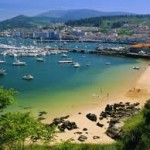 one region where a distinct local dialect is spoken as a first language by around 56% of the population. This area includes the cities of La Coruña, Vigo and the capital Santiago de Compostela. During the Franco regime, it was forbidden to speak Galician in public, but the language was not to be suppressed and it has enjoyed official status in the region, alongside Castilian, since 1978.
As well as a language of its own, Galicia also has a number of cultural differences from the rest of Spain, which are often thought to be Celtic in origin. For example, at a Galician festival you can hear bagpipes (galleta galleo) and see pipers dressed in costumes very similar to those seen in Britain’s Celtic strongholds. There is even genetic evidence to suggest that the parts of Britain’s Celtic population actually came from Spain, although sceptics maintain that Galicia owes its culture and language to the fact that the area never succumbed to the Moorish invasions which so influenced the rest of the country.
Galicia borders Portugal and its language is closely related to Portuguese. The two languages remain mutually intelligible today, though Galician adheres to standard Spanish spelling conventions, a subject you can learn all about when you enrol in our intensive Spanish lessons in London.

 your own objectives and ability. What’s more, research from several universities suggests that learning another language can actually slow ageing of the brain and
  romance with a small r in the sense of being romantic (though the word has the same root, and many do think that Spanish does sound very romantic!), but rather it derives from Roman – the Romance languages are those that have their origins in the spoken Latin of Roman times.
 lamb or capon. Since 1962 the countdown to midnight has been broadcast on national TV from the clock on the Casa de Correos building in Puerta del Sol Square in Madrid where many people gather to see in the New Year in Spain’s equivalent of the UK’s broadcast from Big Ben.
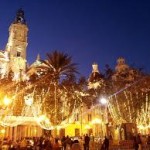 the Immaculate Conception, or Inmaculada Concepcion. It might be a little early yet to wish people a happy Christmas (Feliz Navidad) but it’s never too early (or late!) to try your hand at the Spanish language. So, as we enter the festive season here are some ideas and vocabulary for you to try out.
 Domínguez Fernández to use the Spanish naming custom where, if you remember, Dominguez is the paternal surname and Fernández the maternal one.
 none the less become one of the most influential contemporary Hispanic designers in her 15 years in the industry with her eclectic designs which have been described as “having the delicateness of a ballet dancer, while at the same time, the strength of a rock star”.
 Carolina Herrera. Renowned for her personal style, she was named on the International Best Dressed list back in 1972 and inducted to its Hall of Fame in 1980. Her designs have been worn by First Ladies of the United States, of which she became a naturalised citizen in 2009, and her gowns have graced many a red carpet on actresses such as Renée Zellweger, Cameron Diaz and Nicole Kidman, and Colombian singer Shakira.
 Italian fashion house; the subject of our blog this week is Spanish fashion designer Ágatha Ruiz de la Prada. Born in 1960, she is also a high-ranking member of the Spanish nobility: one of the Grandees of Spain (Grandes de España), Marchioness of Castelldosrius and Baroness of Santa Pau.